
Always two people
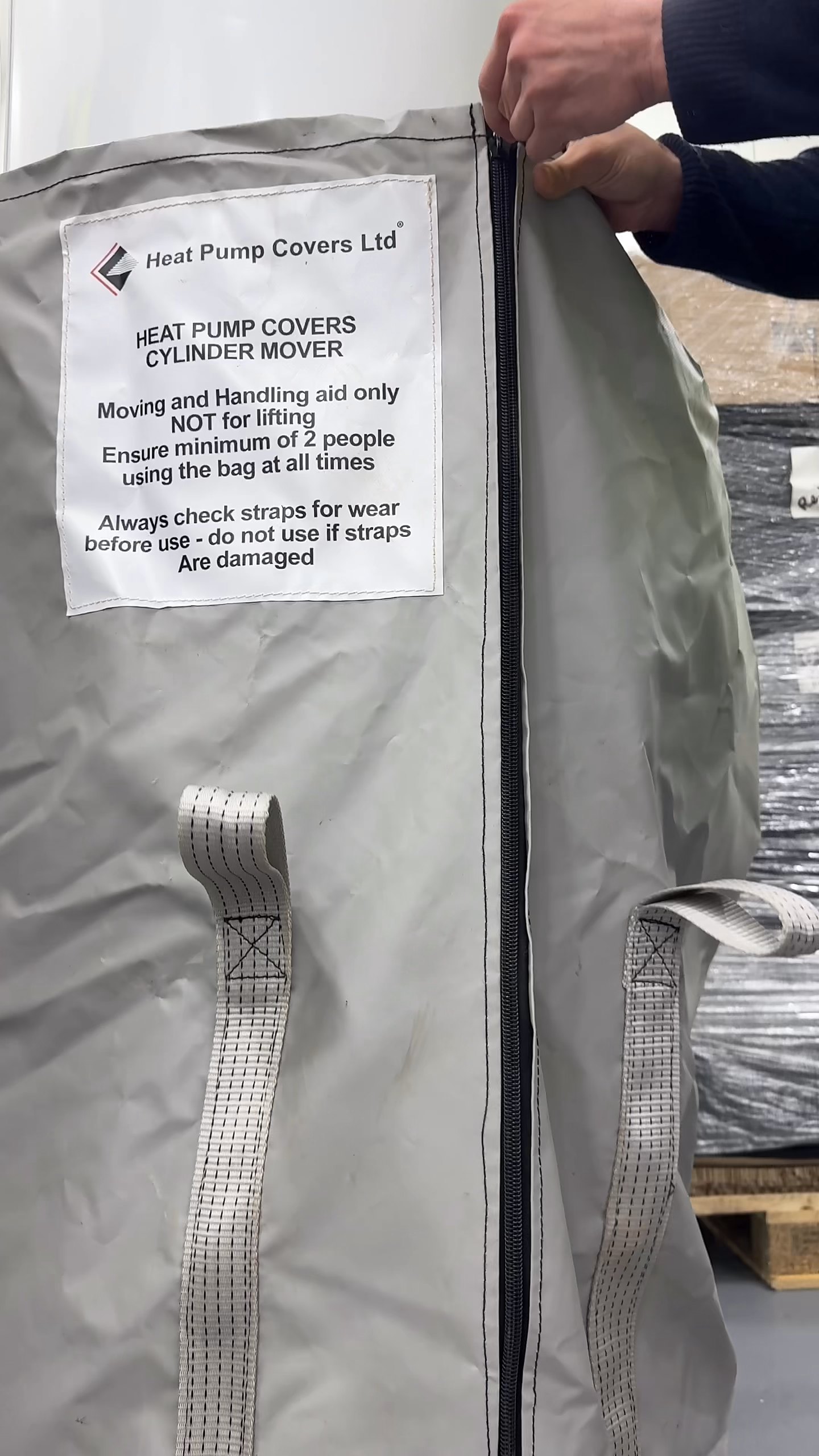
Use the mover with a minimum of two people at all times.
The product
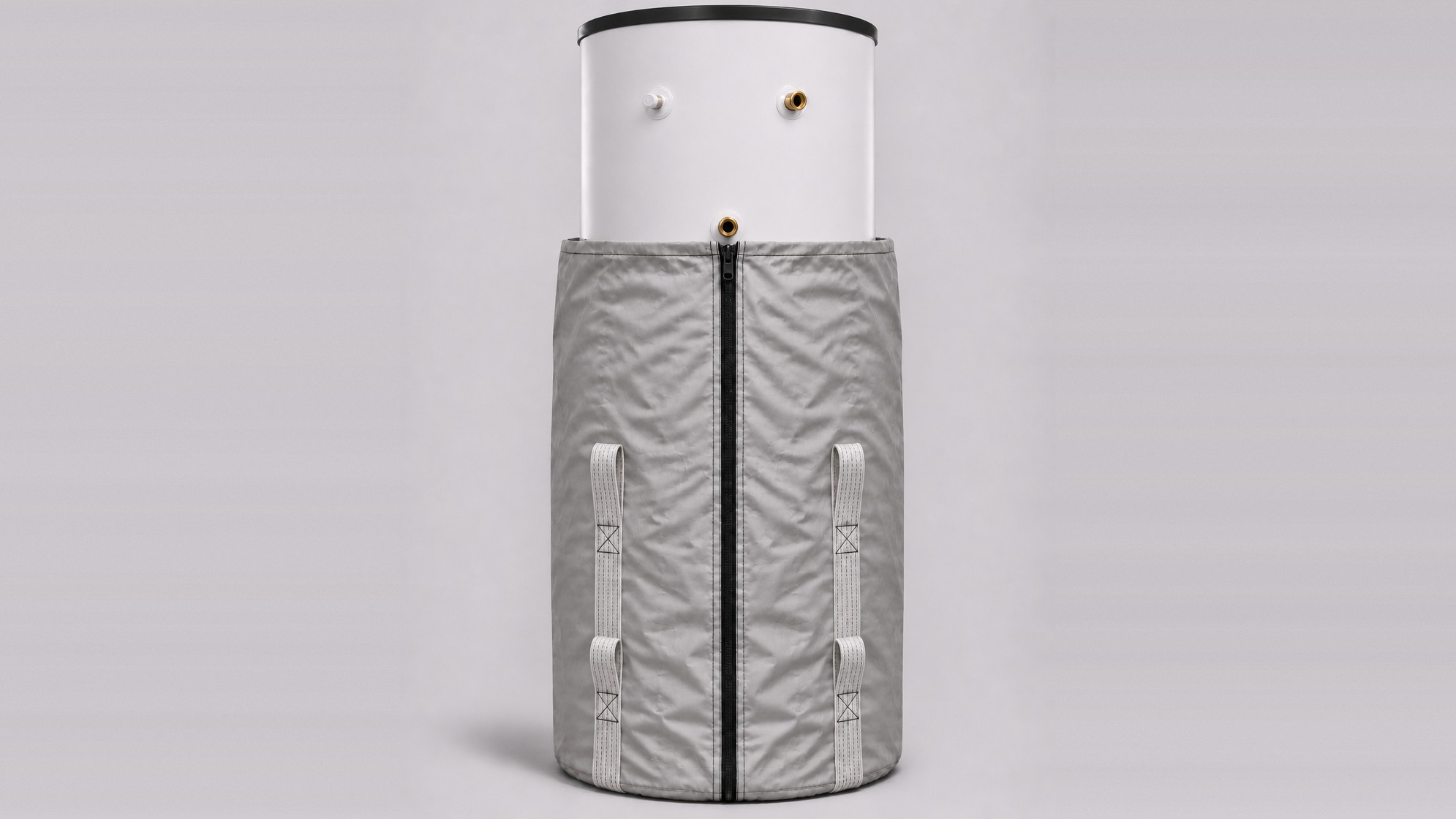
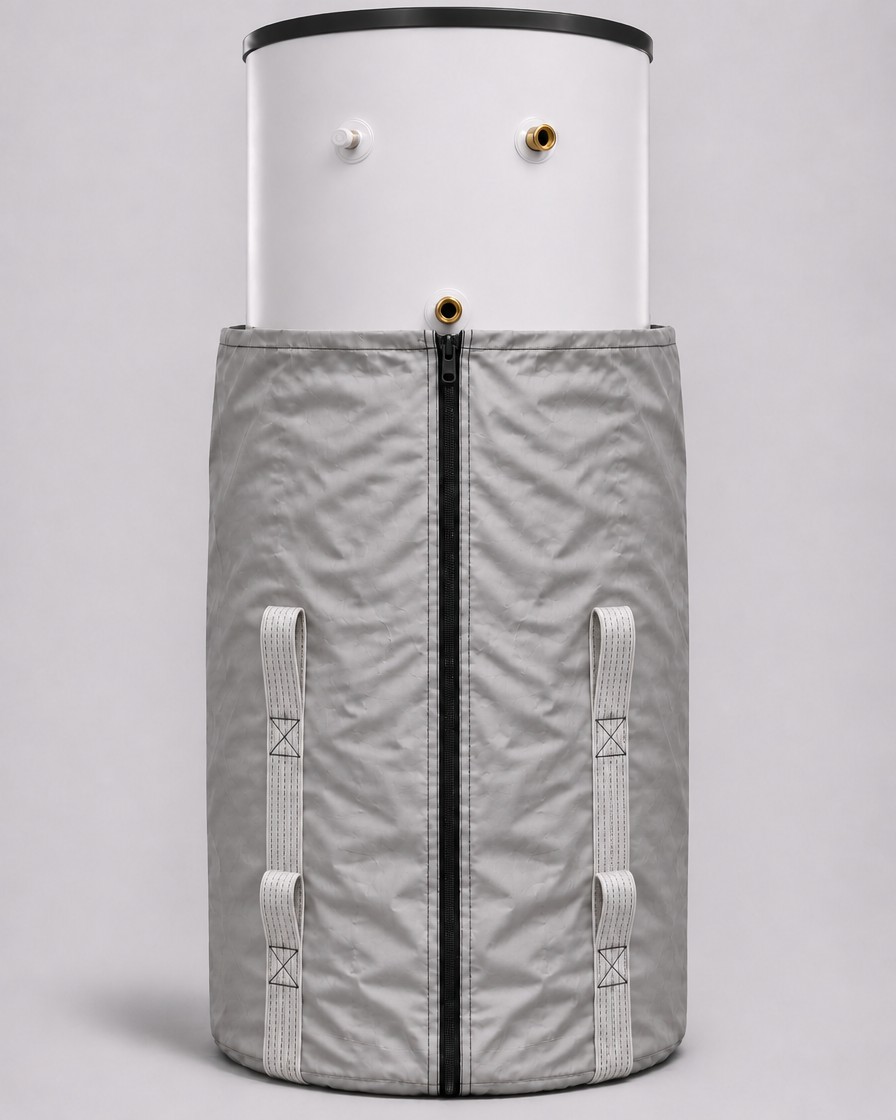
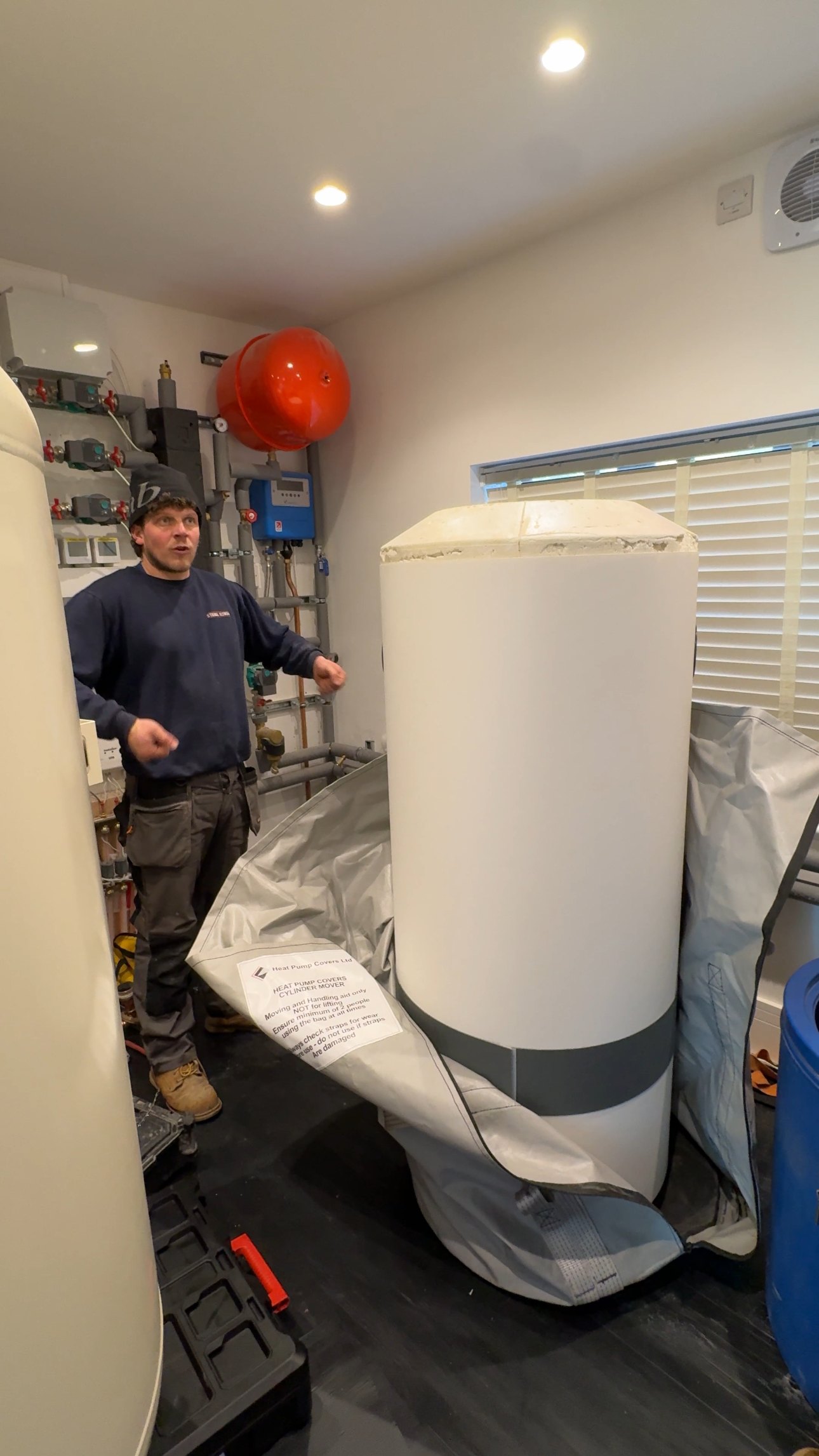
A heavy-duty carrying sleeve for hot water and heat pump cylinders. Tip the cylinder, slide the mover underneath, zip it up, and a load that never had anything to hold suddenly has proper handles.
It’s made for the people who move cylinders week in, week out: heating engineers, heat pump installers, plumbers and the crews behind them, from sole traders to fleets of vans.
Look the part
Getting the cylinder from the van to the cupboard is a huge part of the job. It’s hard graft, and it’s where an install is done safely and properly, or not.
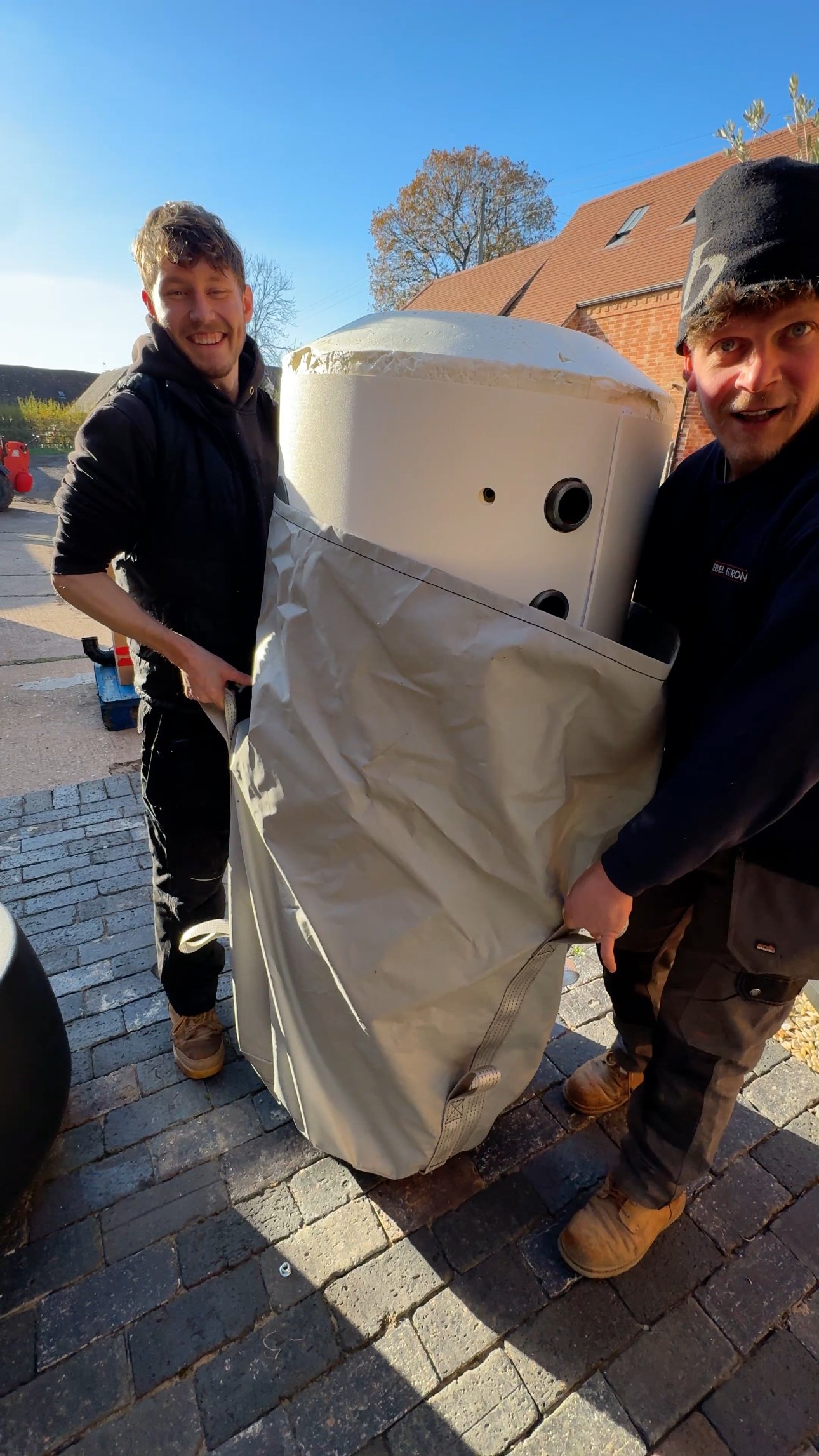
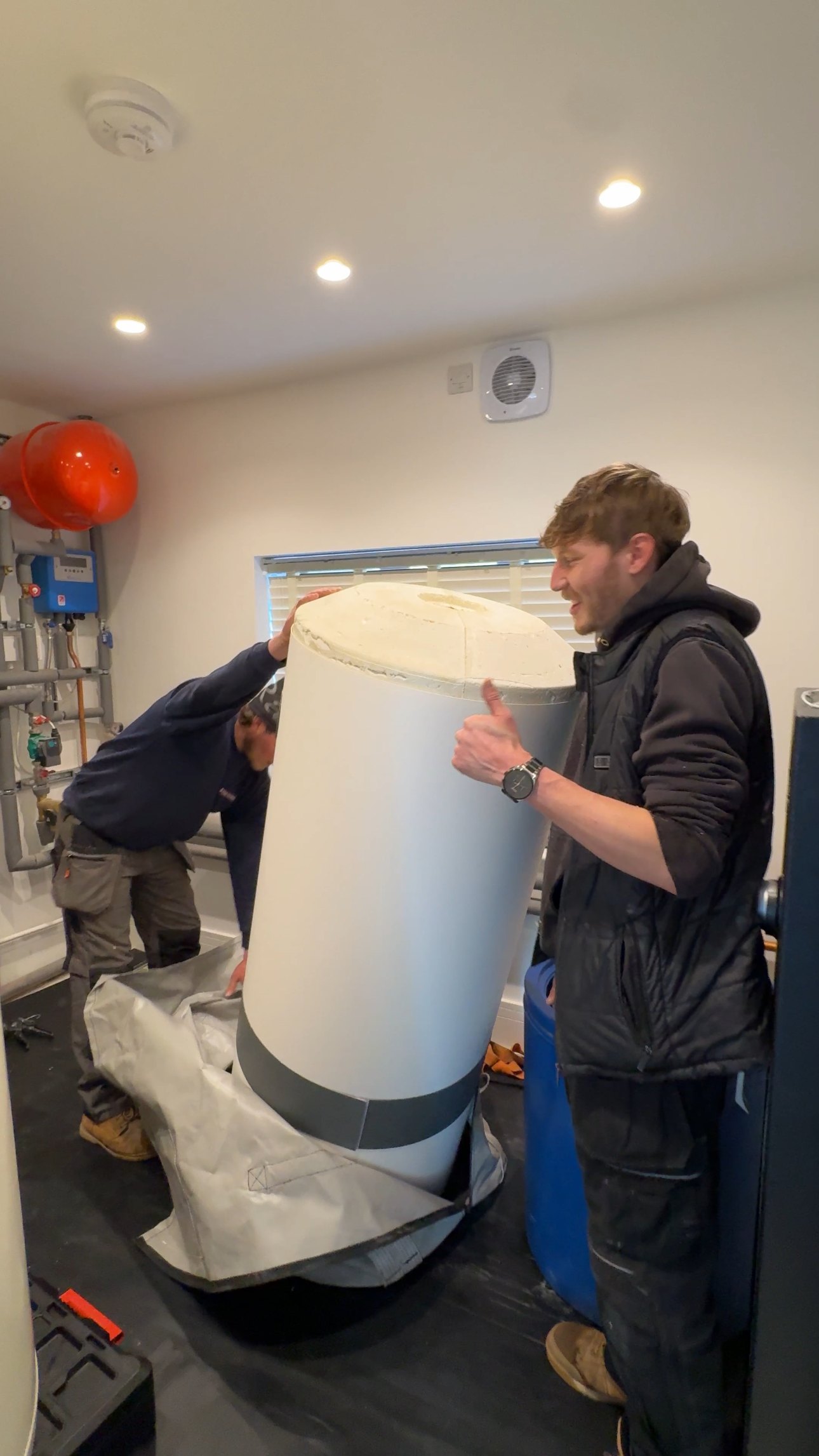
It’s also the first thing the homeowner watches you do. Lugging an awkward cylinder down their hallway, wrestling it round corners and catching the paintwork is what makes a crew look like rookies. Zip it into the mover, take it by the handles and walk it in under control, and you look like the seasoned pros you are.
The homeowner relaxes. They can see their new cylinder, and their home, are in safe hands, and nothing gets damaged on the way in.
The proper way to carry
Cylinders were never made to be carried. They’re smooth, heavy and round, with nowhere to put your hands.
So people make do: gripping the pipework and fittings, laying the cylinder on its side, or bear-hugging it up the stairs. Every one of those is a compromise, and every one raises the risk of a damaged cylinder or a fall.
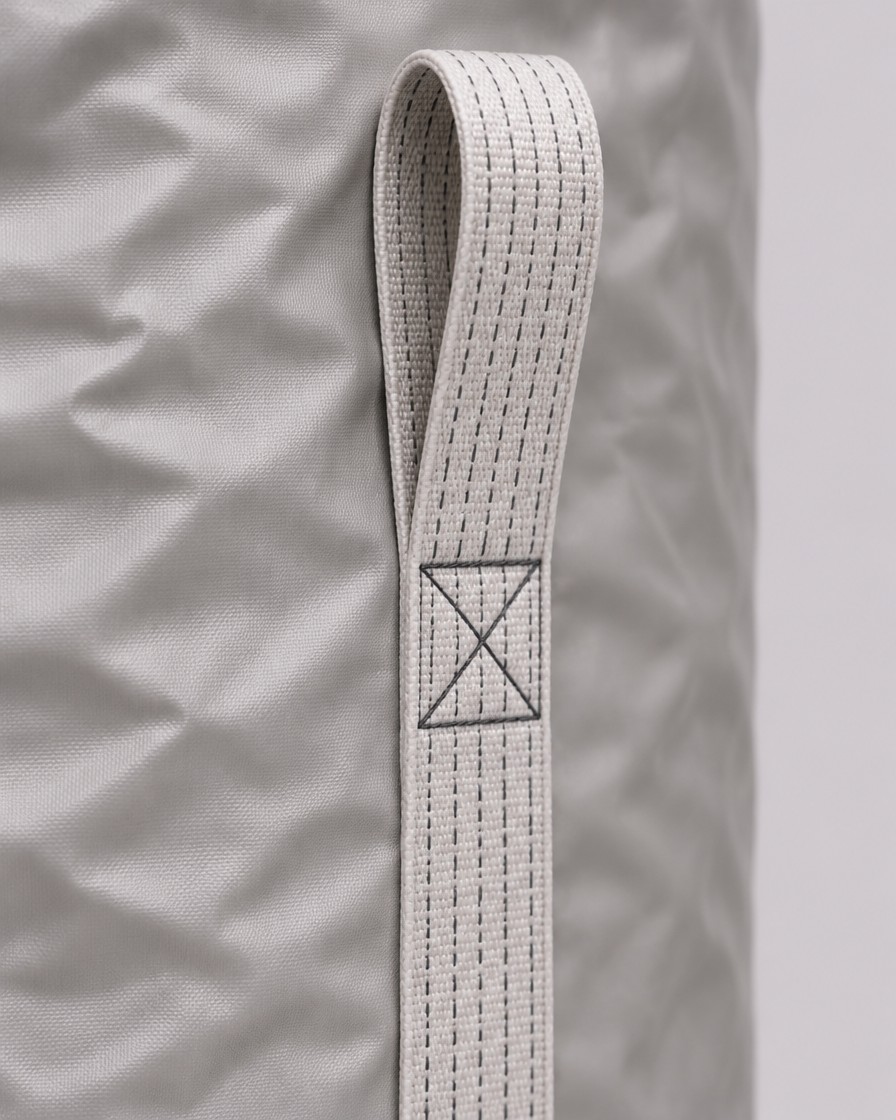
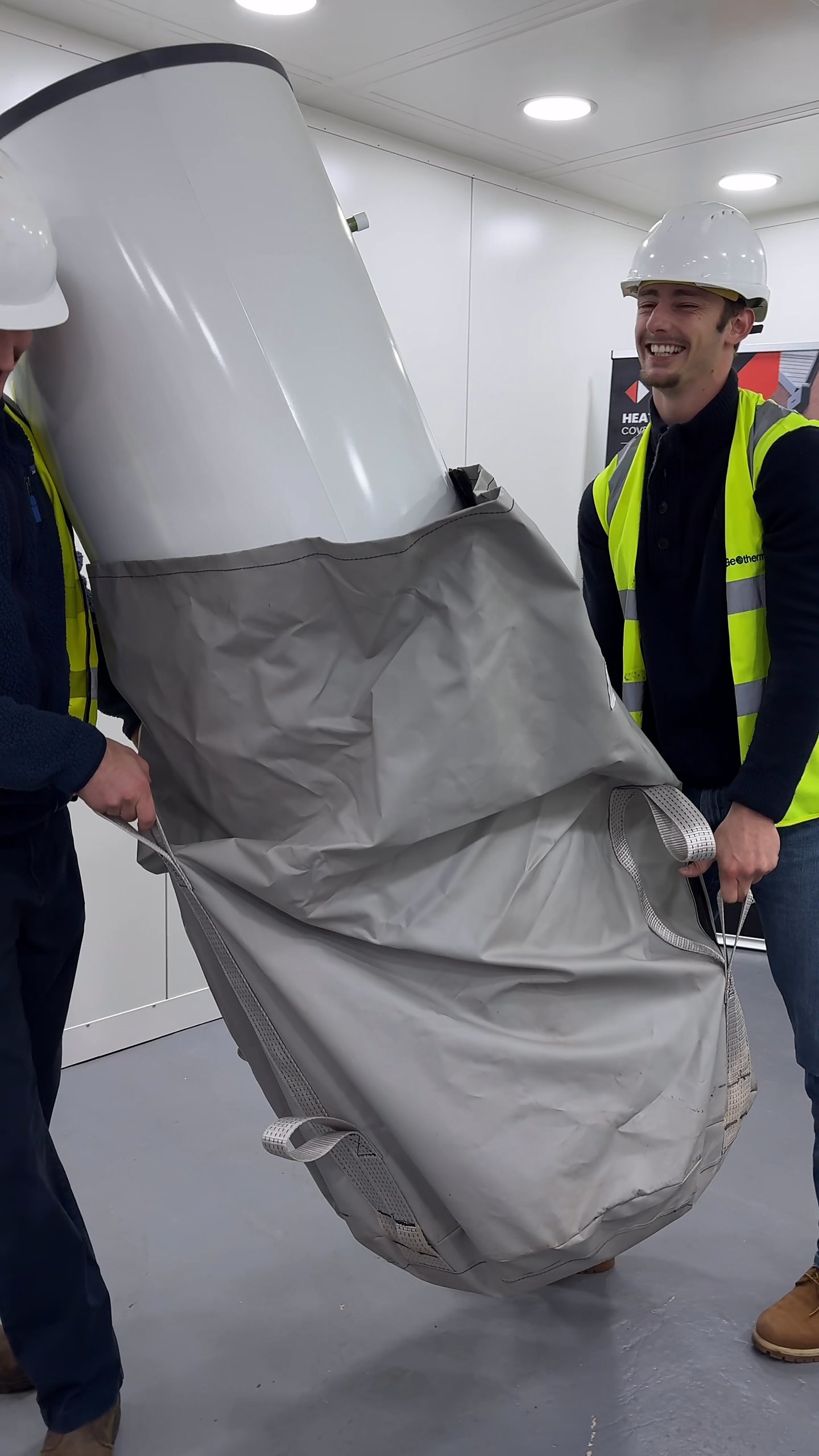
The mover gives you a proper way to do it. Eight stitched webbing handles let up to four people take hold at once, each with their own grip and their own space, so nobody’s treading on anyone’s toes. Organised like that, even the heaviest cylinders move safely from A to B.
Time saved
The mover can save well over an hour on a single install. This job shows how.
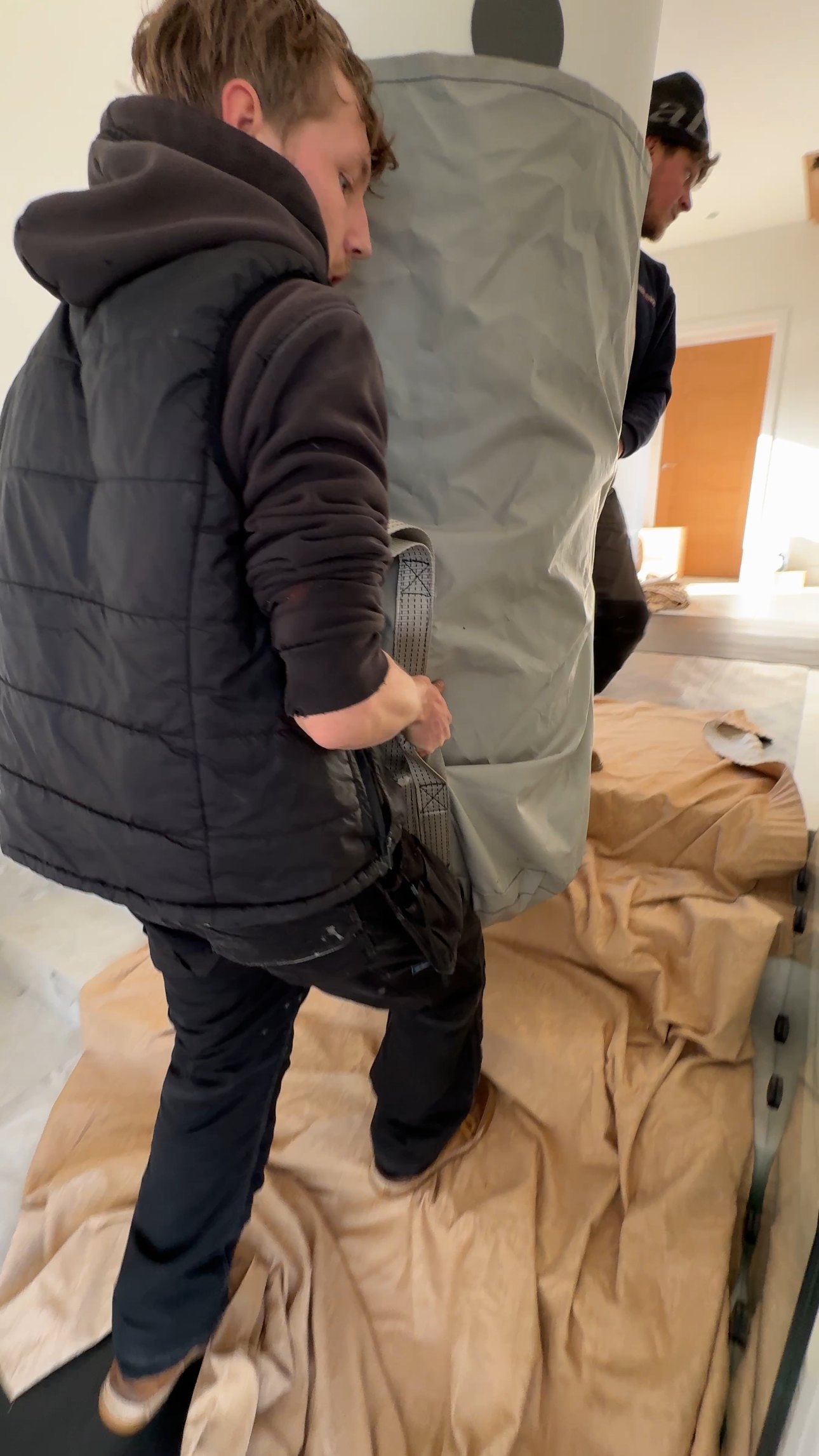
The installers were taking out two cylinders and fitting two new ones. The route to the plant room went up a flight of stairs, along a tight corridor and through a doorway with almost no clearance, with a gun safe in the way.
In planning, the team debated removing the gun safes, which meant unbolting them from underneath, through the floor, via the cellar. Slow work, and another layer of liability and uncertainty for the customer and the installer.
The mover settled it. With carriers on either side through the doorway, they slid and turned the cylinder through the tight spots with ease. Door to plant room: three minutes. No removals, less liability, and around one to two hours saved.
“An absolute game changer.”The installer on the job, who can’t see himself doing another install without one
Regulations
The Manual Handling Operations Regulations 1992 require employers to avoid hazardous manual handling where they reasonably can, assess what can’t be avoided, and reduce the risk. A cylinder is one of the heaviest, most awkward lifts on any heating job.
Run the numbers below and even a team of two or three is over HSE’s guideline figures for a typical cylinder. That lift needs planning, and every control you can reasonably add.
The mover helps. A full-hand grip on every handle keeps the load close and shared evenly, so the team can lift with their legs and a straight back. Nobody is fumbling for a new grip mid-carry, which is when slips and trips happen.
HSE’s figures are guidelines, not limits: there is no such thing as a completely safe weight. Use the mover as part of your own risk assessment. Sources: HSE INDG143, HSE L23, Joule datasheets.
High usability
Every install has a cylinder, and every cylinder has to be moved. That makes the mover a tool you’ll reach for on every single job, just like your drill or a builder’s trowel.
For how often it gets used, it’s an inexpensive, practical bit of kit. For a seasoned installer, it pays for itself within the first week.
We’ll only use your email to tell you about the cylinder mover. Privacy notice
The common mistake
A cylinder is smooth, round and too wide to hug, so there is nowhere natural to put your hands. People grab the only things that stick out: the brass connections, the dust caps and the relief valve. Those fittings are there to carry water, not the weight of the cylinder.
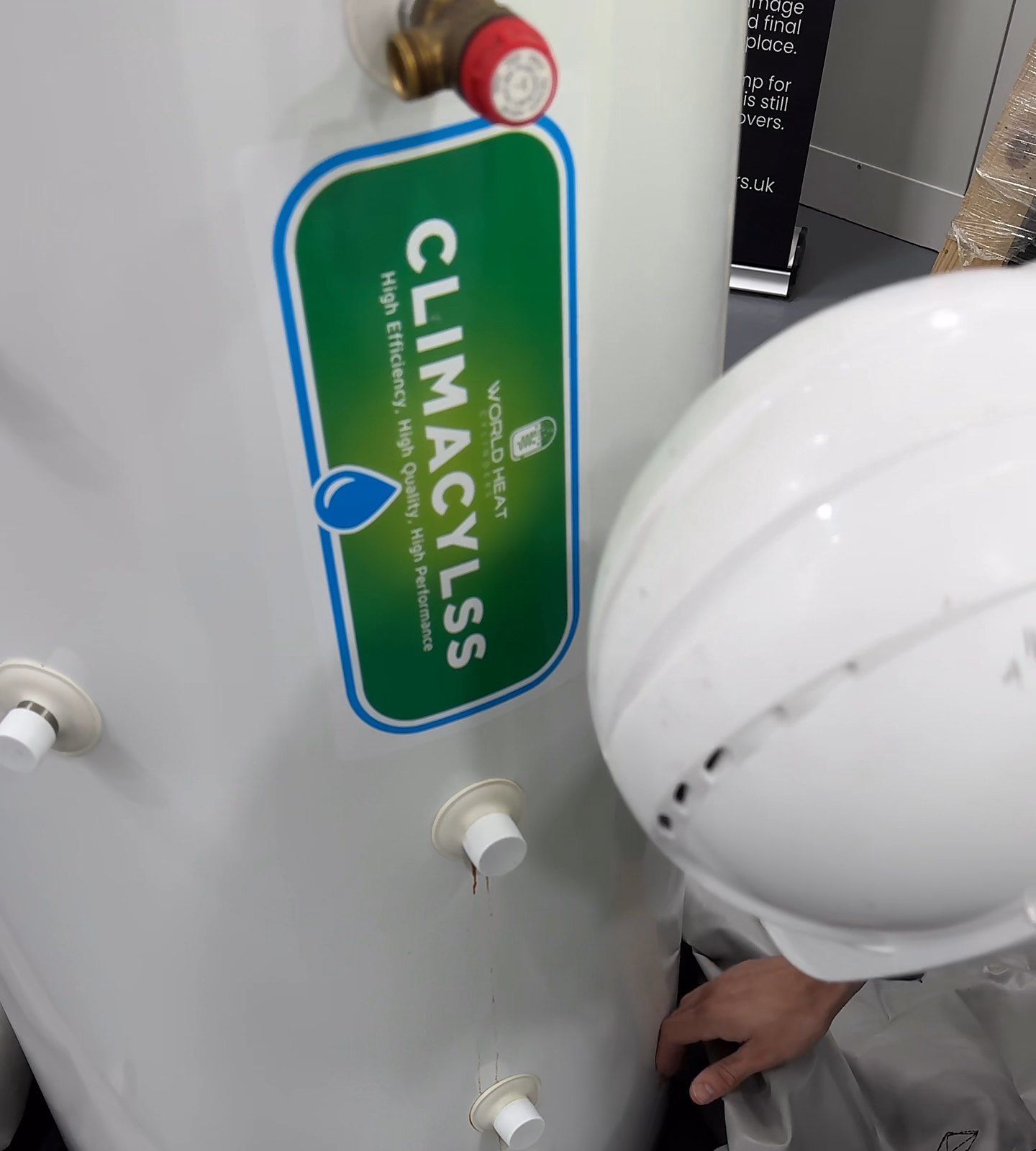
“Never carry the cylinder using the pre-plumbed pipework or components.”The Electric Heating Company, Neptune unvented cylinder manual, 2022
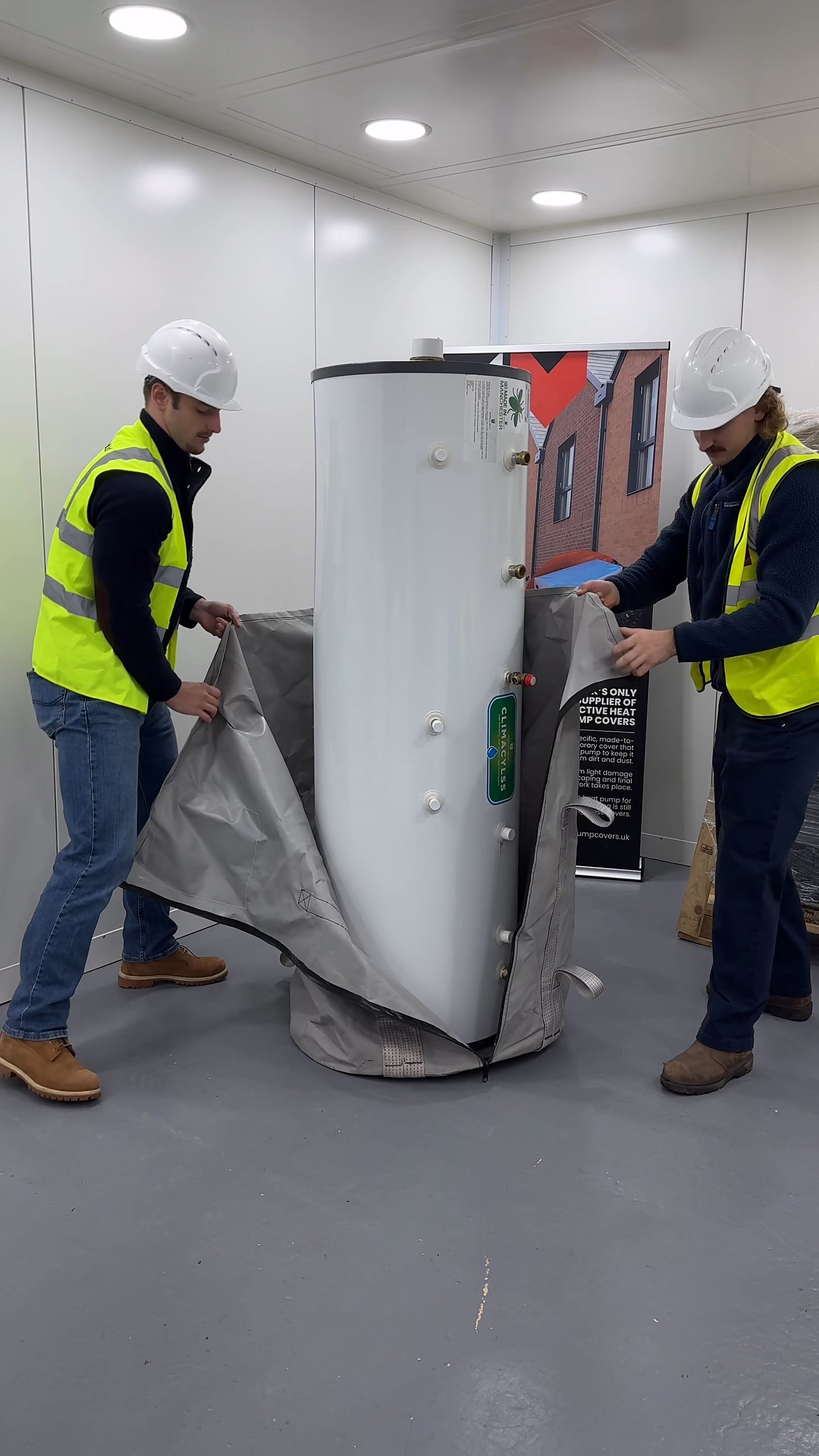
Tip the cylinder back and slide the mover under its base. The sleeve is made from the same tough reinforced fabric as our heat pump covers.
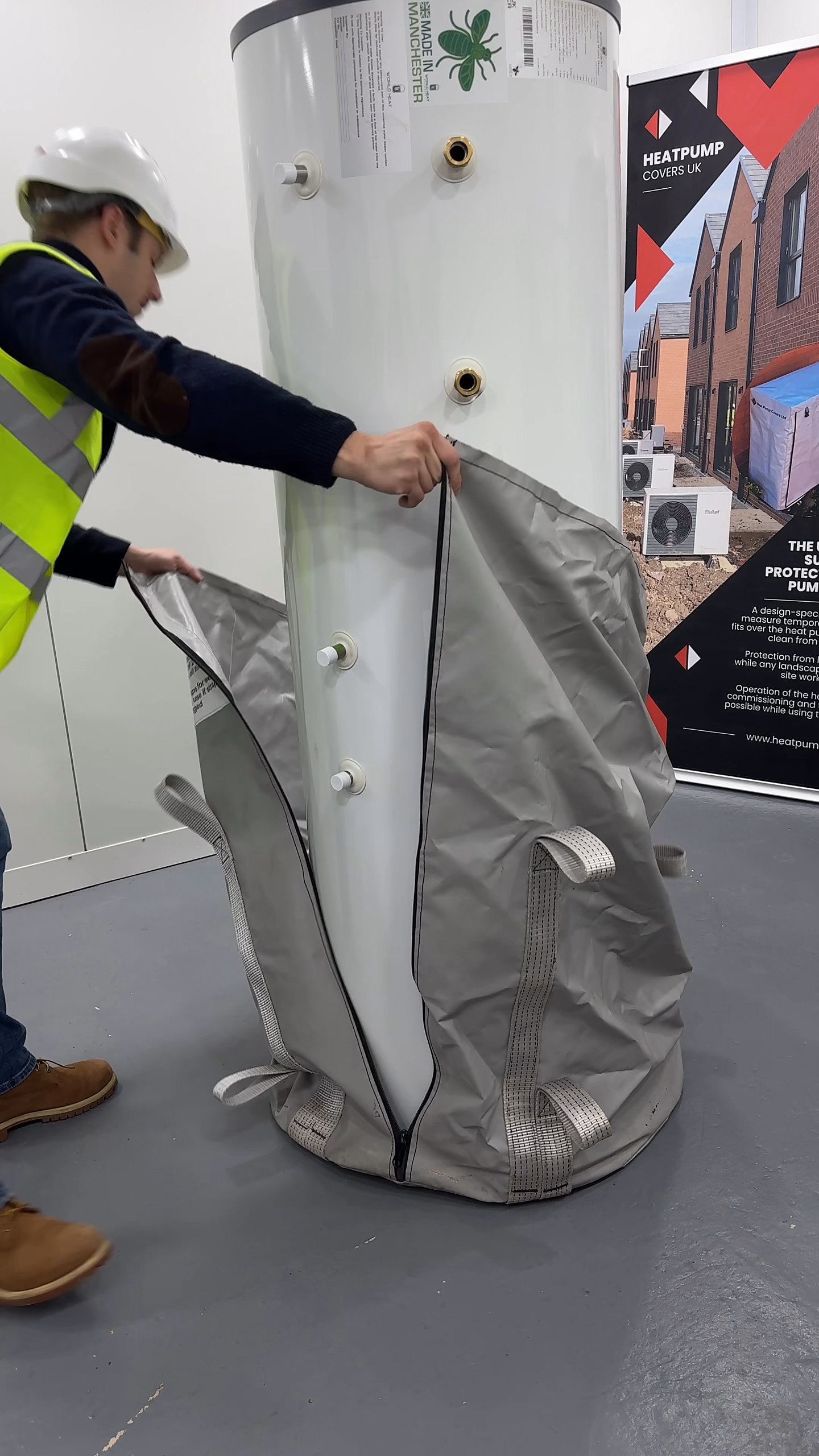
Stand the cylinder up, pull the sleeve up around it and run the full-height zip. The top stays open; the cylinder is held snugly in the fabric.
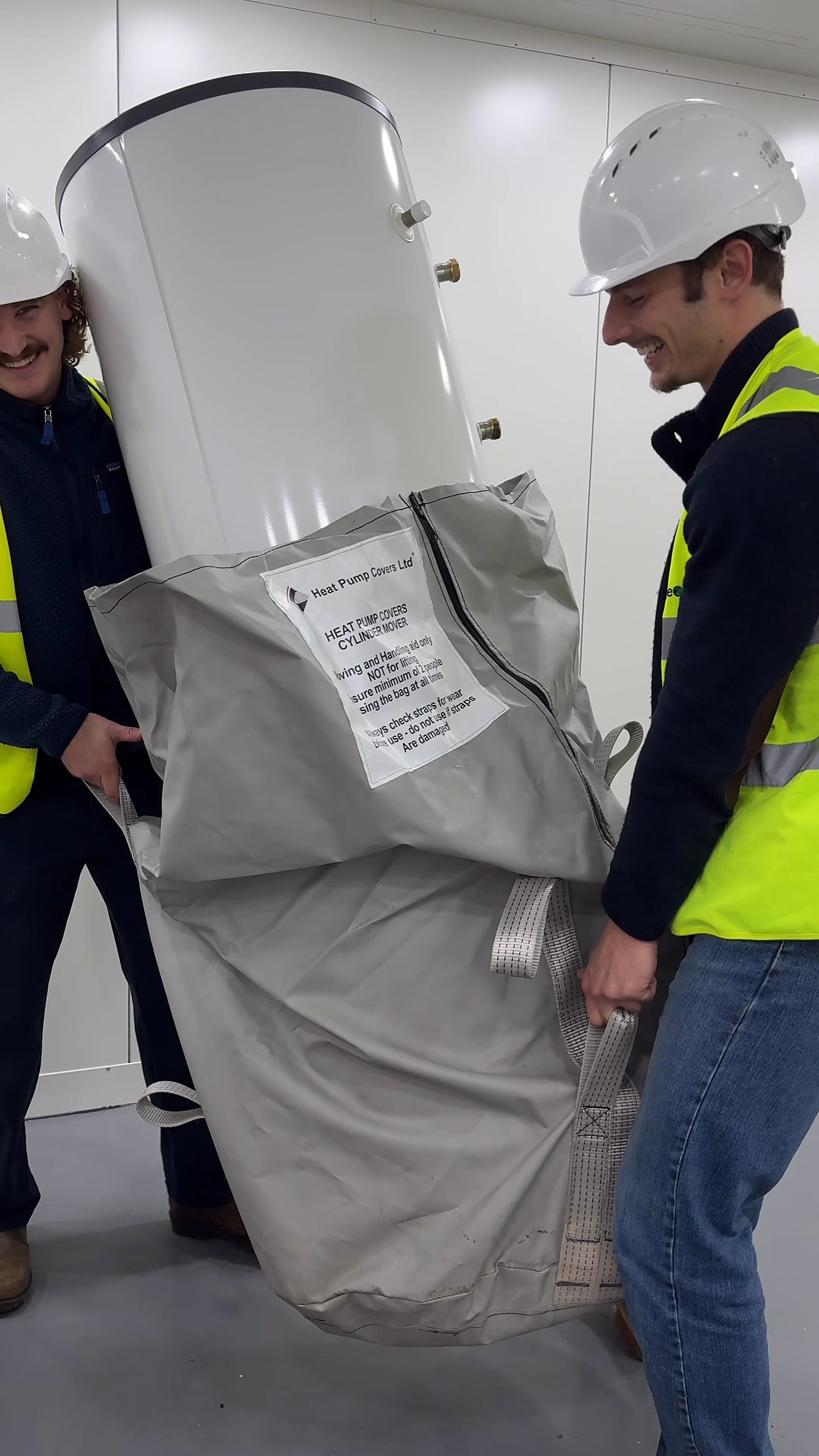
The handles come in pairs, one low and one high. On stairs, the person below holds the lower handles on one side and the person above holds the higher handles on the other, so the cylinder leans to the stair angle.
Stairs are where cylinders get dropped, walls get gouged and backs get hurt. The person below takes the lower handles, the person above takes the higher handles on the other side, and the cylinder sets itself at the angle of the stairs, so neither carrier is holding it out of line.
It is a moving and handling aid, sewn with its own instructions.
Use the mover with a minimum of two people at all times.
Check every strap for wear before use. Do not use it if a strap is damaged.
Clear the stairs and landing, agree when to stop, and rest the cylinder at each landing.
The Manual Handling Operations Regulations 1992 ask employers to avoid hazardous manual handling where they reasonably can, assess what can't be avoided, and reduce the risk. A handling aid like the cylinder mover can be part of the reduce step in your own risk assessment. Read our manual handling guide.
For fleets, H&S and procurement
Your engineers get PPE and a crimper as standard. A handling aid for cylinders belongs on the same van kit list.
See it in use
Specification and cylinder sizes on request.
Installers using the cylinder mover in homes, plant rooms and on the driveway.
A fabric carrying sleeve for hot water cylinders. It zips around the cylinder and has eight webbing handles, so two to four people can carry it, including up stairs.
There are handles on both sides: two lower and two higher. The person below holds the lower handles on one side and the person above holds the higher handles on the other, so the cylinder leans naturally to the angle of the staircase.
Two, at all times. The label sewn into the mover says so. It is a moving and handling aid, not a lifting device.
Ask us for the current specification and the cylinder sizes it suits. Email info@heatpumpcovers.uk or call (+44) 07858 650 195.
No product can do that on its own. The Manual Handling Operations Regulations ask employers to avoid, assess and reduce risk. A handling aid can help reduce risk as part of your own assessment. Read our manual handling guide.
Check the straps for wear before every use, and do not use the mover if any strap is damaged.
Email or call to order, or to talk about kitting out a fleet.