
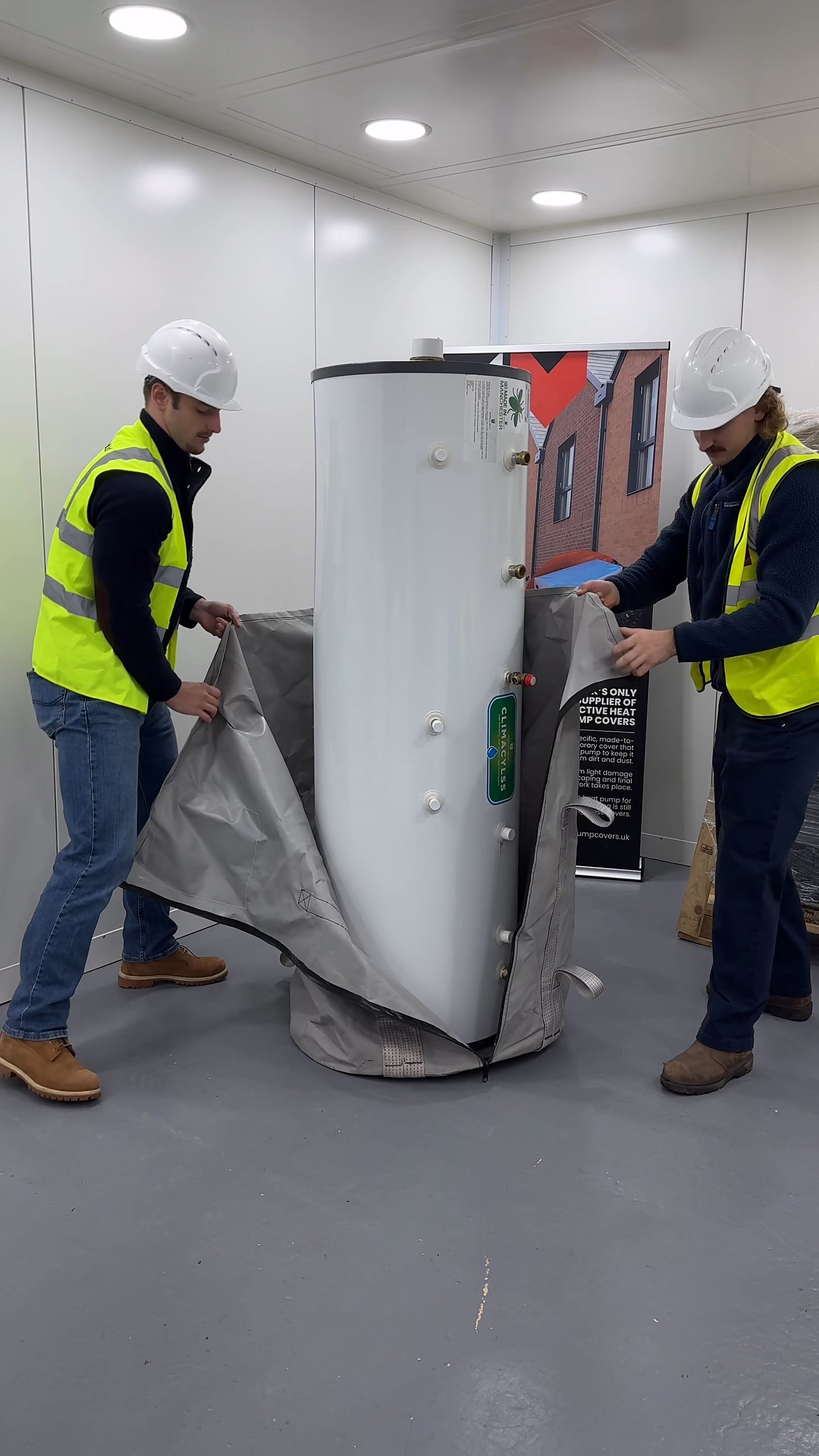
The Manual Handling Operations Regulations 1992 set three duties: avoid hazardous manual handling, assess what cannot be avoided, and reduce the risk. HSE sets no safe weight, but its guideline figures top out at 25 kg for men and 16 kg for women. By our comparison, an empty 300 litre cylinder at 55 to 60 kg is more than twice that, and team handling always needs a more detailed assessment.
What the law asks of employers
Regulation 4 of the Manual Handling Operations Regulations 1992 puts three duties on employers. First, avoid manual handling that could injure people, so far as reasonably practicable. Second, assess any hazardous handling that cannot be avoided. Third, reduce the risk of injury to the lowest level reasonably practicable.
Employers must also tell workers about the weight of the load and, where practicable, which side is heaviest. Assessments must be reviewed when the work changes. HSE is clear that there is no such thing as a safe weight, and it does not set weight limits.
Assess with TILE
Task
Does the carry involve twisting, stooping, reaching up, holding the load away from the body or long distances? Stairs add large vertical movement.
Individual
Does it need above average strength? Take extra care with new or young workers, new or expectant mothers and anyone with a health problem or recent injury.
Load
Is it heavy, bulky, hard to grip or too big to see over? A smooth, tall cylinder with pipe stubs ticks most of these boxes.
Environment
Look for steps, tight turns, changes in floor level, poor lighting and cramped lofts with open hatches or unstable boarding.
HSE guideline figures against an empty cylinder
| Weight | Within guideline? | |
|---|---|---|
| HSE figure, men, best zone | 25 kg | Guideline |
| HSE figure, women, best zone | 16 kg | Guideline |
| Mixergy X 210 litre, empty | 45 kg | No |
| Joule 300 litre direct, empty | 55 kg | No |
| Joule 300 litre indirect, empty | 60 kg | No |
| Joule 300 litre direct, full | 355 kg | No |
The comparison is ours. HSE figures are for a load held close to the body between knuckle and elbow height, and fall away outside that zone. They are not safe limits.
Where a handling aid fits
When avoiding the carry is not possible, HSE lists ways to reduce the risk, including using a lifting aid, making the load easier to grasp and more stable, and reducing carrying distances. Two-person carrying also triggers a more detailed assessment.
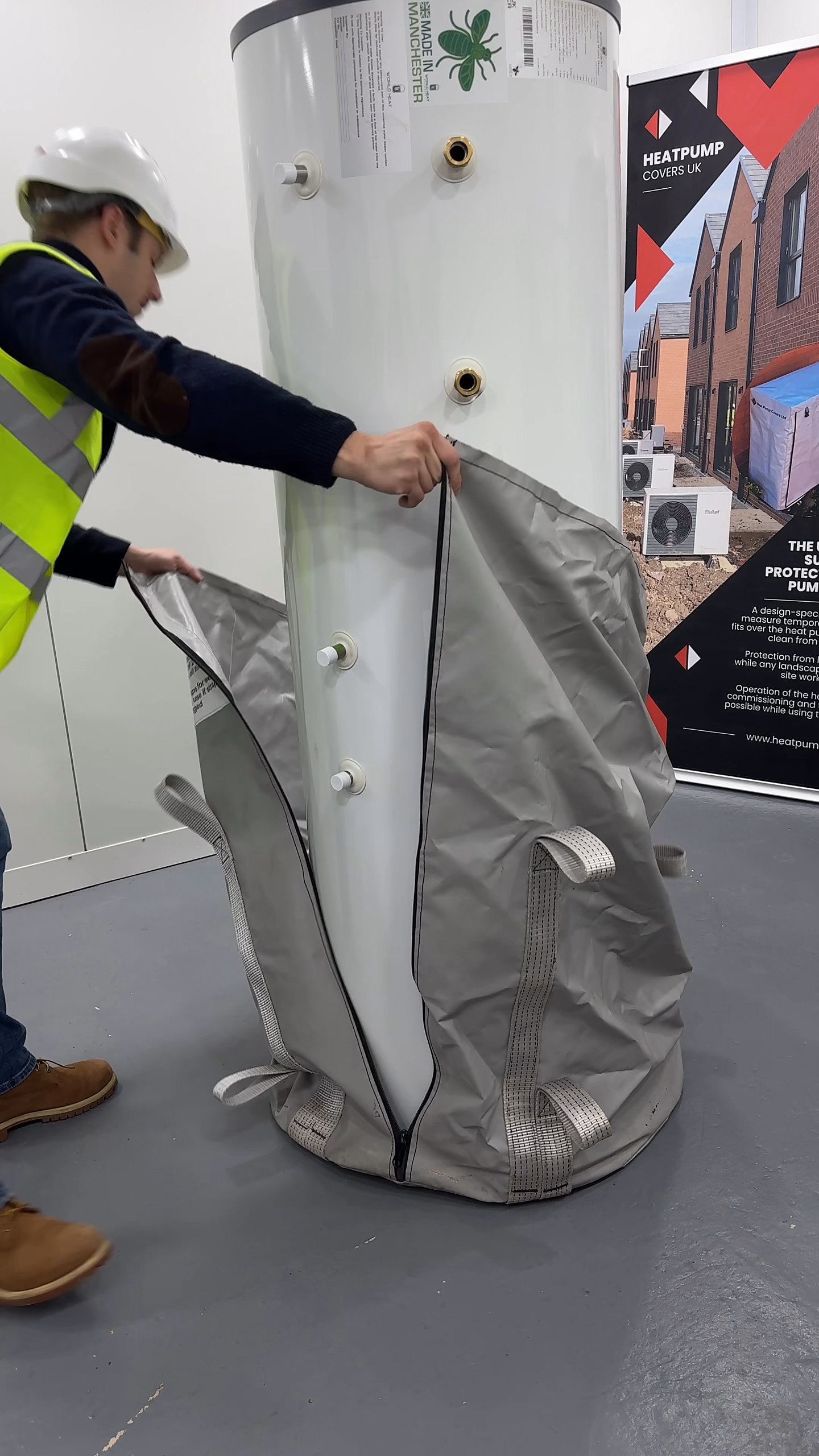
The Heat Pump Covers cylinder mover is a fabric sleeve with eight webbing handles and a full-height zip. It gives both carriers a firm grip and lets the cylinder lean to the stair angle. It helps reduce risk; it does not replace your assessment.
Cylinder handling risk assessment checklist
- Can the cylinder be delivered closer to where it will be installed?
- Is it empty, and do workers know its weight and heaviest side?
- Has the full route been checked, including stairs, landings and loft hatch?
- Is a handling aid with proper handles provided and checked for wear?
- Are two capable people assigned, with one person calling the moves?
- Are rest points planned, given HSE's carrying filter of about 10 m?
- Has anyone at higher risk been considered and given support?
- Is the assessment recorded and reviewed when the job changes?
This is not legal advice
This guide summarises public HSE guidance to help you plan. It is not legal advice, and using any handling aid does not on its own meet your legal duties. Read the HSE guidance in full, including INDG143 and L23, and get competent advice for your own work.
Sources
- legislation.gov.uk: Manual Handling Operations Regulations 1992, regulation 4
- HSE: Manual handling at work, a brief guide (INDG143)
- HSE: Working days lost in Great Britain
- HSE: Construction statistics in Great Britain
- HSE: Construction manual handling FAQs
- HSE: Manual handling at work
- Joule: 300 L direct unvented cylinder product specification
- Joule: 300 L indirect unvented cylinder product specification
- Mixergy: Mixergy X datasheet 2026
- HVP Magazine: Staying safe on the job
Last updated 20 October 2026 by Heat Pump Covers Ltd. This guide is general information, not legal advice. Read the HSE guidance for your own risk assessments.