
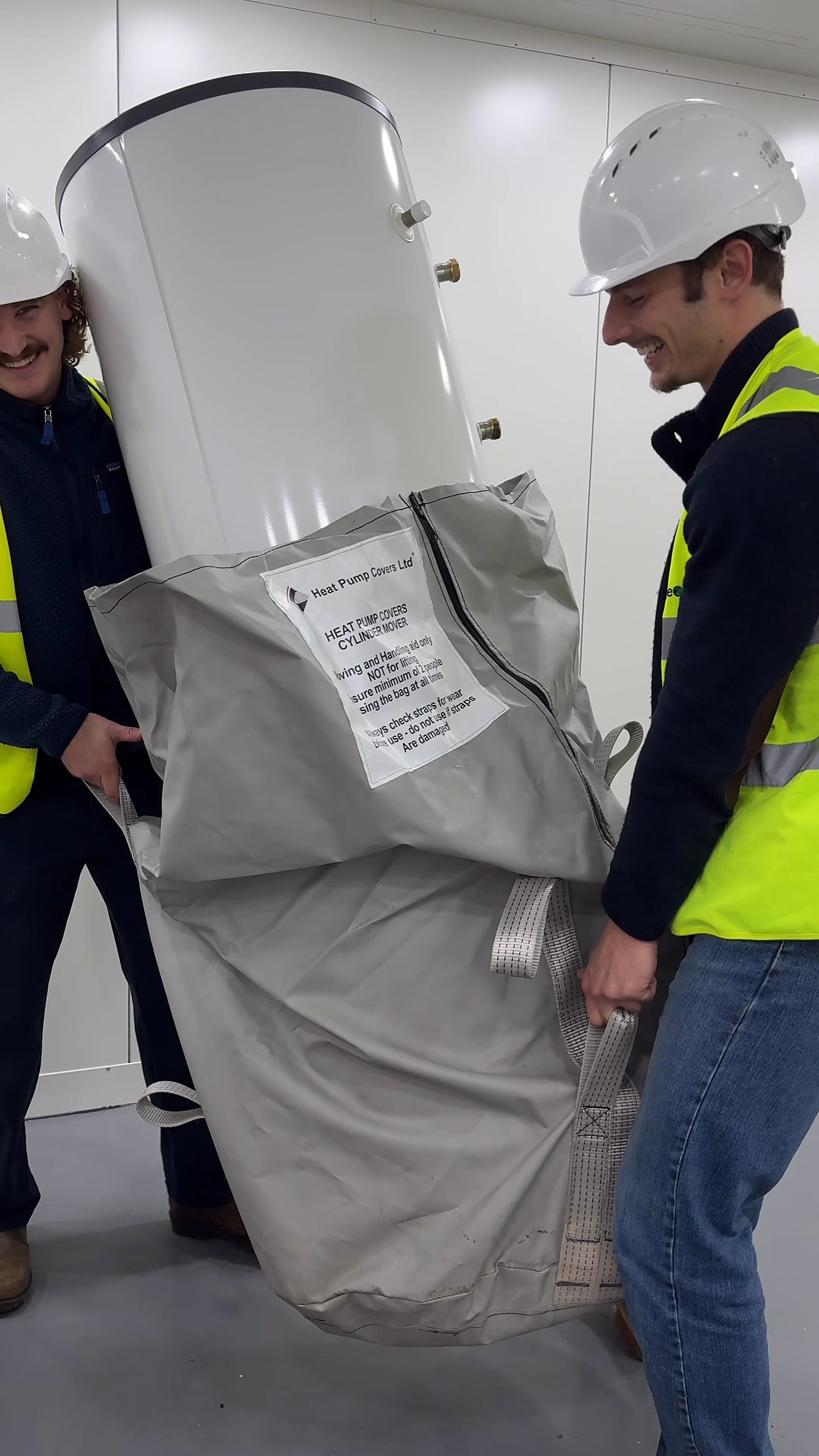
An empty 300 litre unvented cylinder weighs around 55 to 60 kg, and a full one far more, so it should only ever go upstairs empty. Walk the route before you lift, clear the stairs and landings, and agree who leads. Two people carrying with a handling aid that has proper handles, such as a sleeve with eight webbing handles, keeps the cylinder close, steady and angled to the stairs.
Why cylinders are awkward to carry
A hot water cylinder is tall, smooth and round. There is nothing to hold, the weight sits high, and pipe stubs and labels get in the way of your hands. An empty 300 litre unvented cylinder weighs around 55 to 60 kg depending on the type, and a 210 litre model can still be about 45 kg.
Most cylinders end up upstairs, in an airing cupboard or a loft, so the hardest part of the job is usually the staircase. Getting it right is mostly planning: the route, the people and something proper to hold on to.
Moving a cylinder upstairs, step by step
Walk the route first
Check every stair, turn, landing and doorway before you lift. Measure the tightest point, and for a loft, check the hatch size and the boarding you will stand on.
Clear and light the way
Move rugs, boxes and stair gates. Make sure the stairs and landing are well lit, and wear boots with a good grip.
Make sure it is empty
Only ever carry a cylinder empty. A new one should be dry. If you are moving an old one, drain it fully first, because a full 300 litre cylinder weighs hundreds of kilos.
Put it in a handling aid
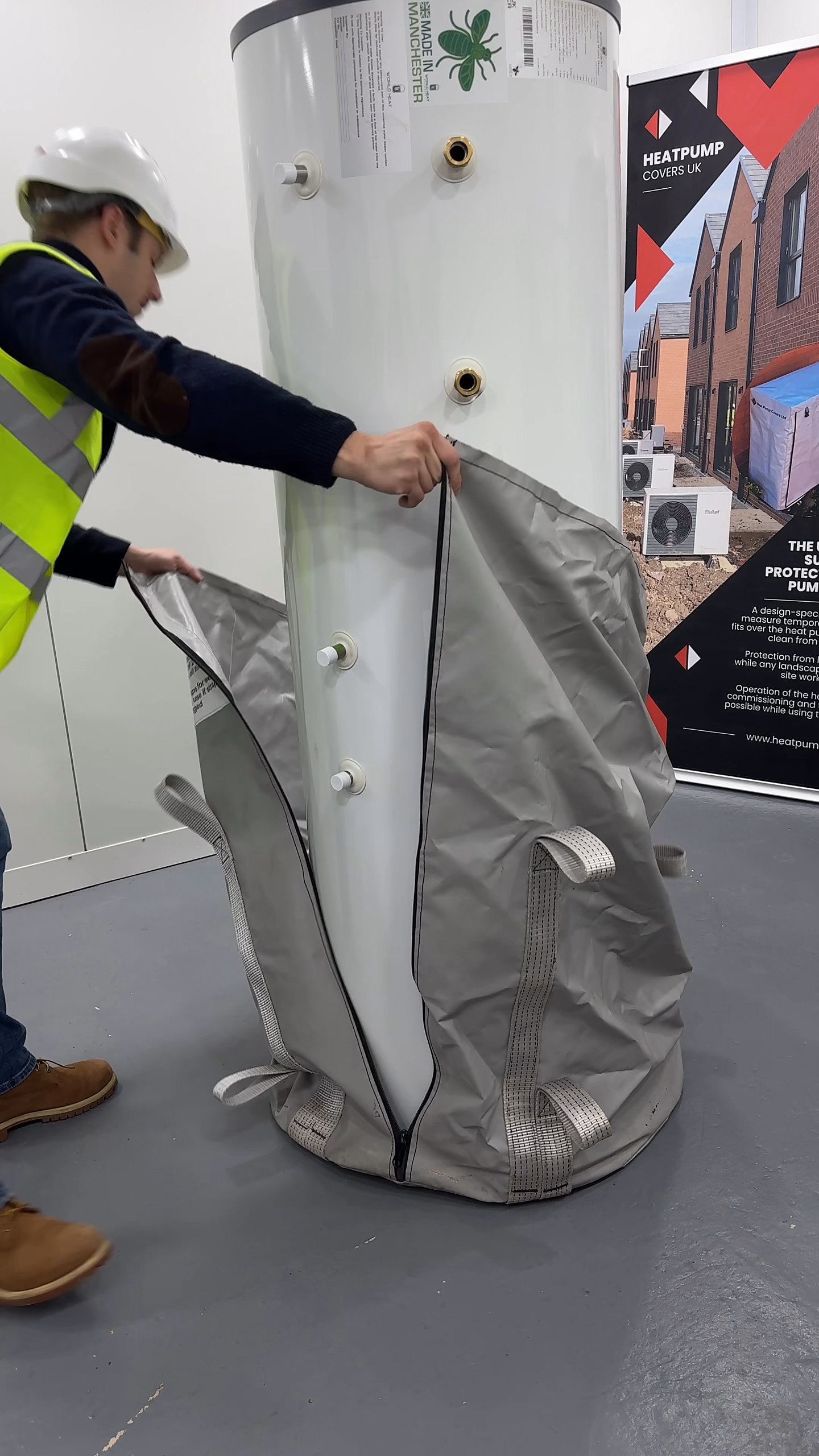
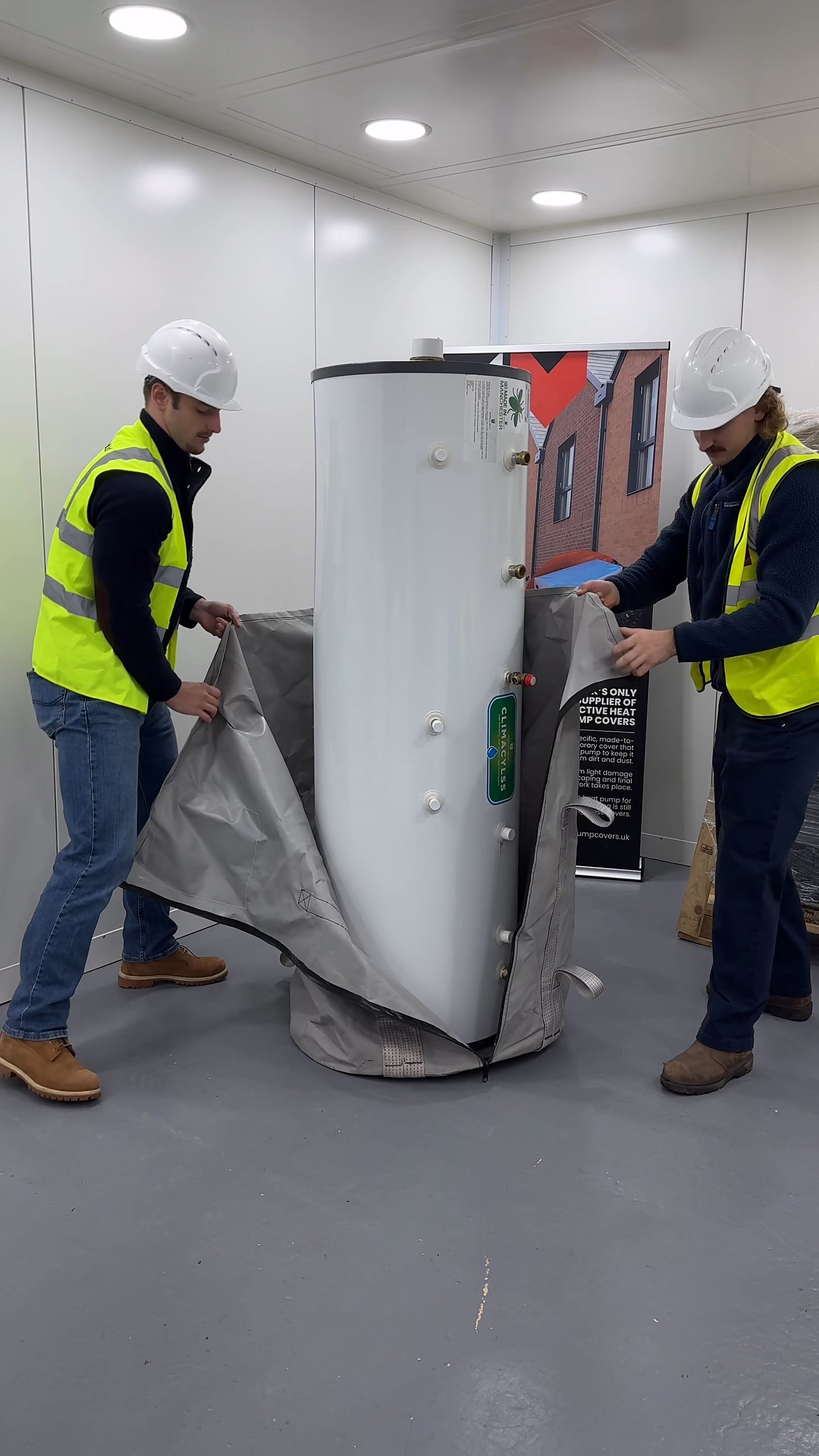
Fit a sleeve or carrier with proper handles, so both people grip webbing rather than a smooth shell. Check the straps for wear before every carry.
Choose handles for the stair angle
The person below holds the two lower handles on one side. The person above holds the two higher handles on the other side. The cylinder leans to the stair angle.
Talk, then rest at the landing
Agree who calls the moves. Go one step at a time on a count, stop at the landing to reset your grip, and never twist while holding the load.
The stair carry
On a flat floor, two people lift a cylinder level. On stairs, one person is always higher than the other, so a level grip forces the lower person to reach up or the top person to stoop.
The Heat Pump Covers cylinder mover has eight looped webbing handles, set lower and higher. The person below holds the lower handles on one side, the person above holds the higher handles on the other, and the cylinder settles at the stair angle.
Before you lift, check
- The cylinder is empty and every pipe stub is capped or protected
- You have measured the tightest turn, doorway or loft hatch on the route
- Two people are available, and both know the plan and who calls it
- The handling aid straps are not worn, frayed or damaged
- Stairs, landings and loft boarding are clear, lit and stable
- There is somewhere to rest the cylinder at each landing
- Your employer's manual handling assessment covers this lift
Planning a lot of cylinder installs?
The cylinder mover is made in the same reinforced fabric as our heat pump covers. There are no wheels and nothing to assemble. See how we work with installers, or ask us for the spec.
Sources
- Joule: 300 L direct unvented cylinder product specification
- Joule: 300 L indirect unvented cylinder product specification
- Mixergy: Mixergy X datasheet 2026
- HSE: Manual handling at work, a brief guide (INDG143)
- HVP Magazine: Staying safe on the job
Last updated 20 October 2026 by Heat Pump Covers Ltd. This guide is general information, not legal advice. Read the HSE guidance for your own risk assessments.